
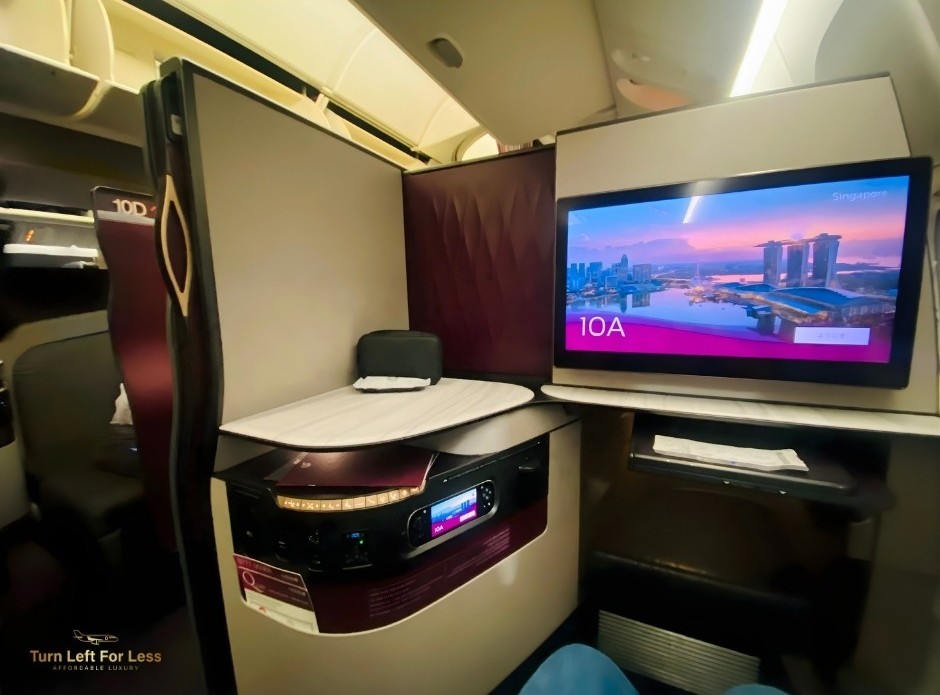
Five Practical Tools That Reduce the Real Cost of Business Class
Flying business class for less rarely comes down to one big trick.
It’s usually the result of small, repeatable systems layered on top of spending that already exists.
The tools below are not hacks.
They don’t rely on loopholes or short-term deals.
They are infrastructure—used correctly, they change the economics of how premium travel is funded.
Each serves a specific purpose.
Each works best when paired with disciplined execution.
1. Turning Large Business Payments Into Airline Points
Most business owners assume points are earned only on card-friendly spend.
That assumption is expensive.
Certain platforms allow large expenses—payroll, rent, supplier invoices, tax obligations—to be processed through a points-earning credit card, even when the original payee doesn’t accept cards.
The mechanics are simple:
You pay the platform with your rewards card
The platform pays the supplier via bank transfer or BPAY
You retain the points
When applied to six-figure annual expenses, the results compound quickly.
Points earned are not theoretical—they translate directly into premium cabin redemptions.
The leverage comes from volume, not optimization.
2. Reducing FX Leakage on International Payments
Foreign exchange costs are a silent tax on global businesses.
Traditional banks embed margin into exchange rates, making international transfers more expensive than they appear.
Using a dedicated international transfer service with transparent pricing and real exchange rates reduces that leakage.
For businesses paying overseas contractors or suppliers, the savings can be material over a year—without changing workflows or vendors.
Lower FX costs don’t just save cash.
They preserve optionality elsewhere in the system.
Look at the Pay Platform offering International services now.
3. Concentrating Spend Through a High-Earning Business Card
Not all business credit cards are designed equally.
Some are built for accounting convenience.
Others are built for points velocity.
A well-structured business card allows everyday operational spend to accumulate into meaningful airline balances—often enough for long-haul premium flights over a year.
The value is not in the card itself.
It's what happens when recurring, unavoidable expenses are routed through it consistently.
Points accumulation becomes predictable rather than incidental.
4. Capturing Points From Household Spend
Points strategies often overlook small, frequent purchases.
Groceries, in particular, represent recurring spend that can be structured to earn outsized value when linked correctly to airline programs.
Subscription-based grocery benefits, when paired with a frequent flyer linkage, allow everyday household spending to contribute meaningfully to points balances.
Individually, the gains seem minor.
Over time, they add up to flights that would otherwise be paid in cash.
5. Treating Growth Tools as Dual-Purpose Spend
Some business expenses do more than one job.
Certain subscription tools deliver operational value while also being eligible for points earned when paid via the right card.
When a growth expense can:
Improve the business
Be claimed legitimately
Earn high-value points
It effectively reduces the net cost of both outcomes.
This is not about buying things for points.
It’s about recognising when necessary spend can be structured more intelligently.
The Mental Model
Premium travel on points is not funded by indulgence.
It’s funded by alignment.
When business, household, and operational spending are routed through deliberate systems, points stop being a side effect and start becoming an asset.
Most people don’t fail to earn points because they don’t spend enough.
They fail because their spend is fragmented, unstructured, and unintentional.
The difference is not effort.
It’s design.


